Update: Due to low usage, Google Health decided to cease operations as of Jan. 1, 2013. Many of Google's users were unwilling to share personal information online, even if it was for doctors, and its lack of success is most likely due to fear of identity theft.
Monday, February 20, 2012
Vision without Sight
Going on to the Tech section of news websites this morning, all anyone seems to be talking about is Facebook. With the new IPO release, operating issue, and the conclusion that Facebook users get more "likes" than they give, it's easy to see why Facebook is just dominating the internet right now. But not here. Today it's not about Facebook.
It's about technology doing something that one could call "miraculous." The blind members of our community may soon be able to use the internet as we all do, under a system dubbed "computer vision."
So how can you see without sight? This is no small task, as the eye and optic nerves are two of the most complex systems in the human body, an entity already riddled with mysteries. But when over 20 million people in the United States live with varying degrees of visual impairment (VI), the need to reduce the difficulty of everyday life for these people becomes evident. There are only a handful of computer vision systems and algorithms qualified to help improve vision, and although more are in development and testing, developers must remember the specific needs of the vision impaired population, and work with their needs in all aspects of design and development.
Because there are many degrees of vision impairment, from simply needing glasses to being completely blind, it is important to note that this article does not overgeneralize the needs of this population. However, there are some aspects of life that most vision impaired people need to improve, and one of these is mobility, or the ability to walk around a crowded city or town without getting hurt. It's equally important for the person to be aware of the direction in which he is moving, be it straight or slightly wavy, so he can adjust his path accordingly. The new computer techniques combine the organization of a computer algorithm with the sensitivity of an optical device similar to the human eye to alert someone to the presence of obstacles and dangers which may otherwise be overlooked. The information is converted into speech or tactile stimulus so the VI person can understand what's going on.
Mobility for the VI community usually means the white cane and/or the guide dog, and most of the advances made on these tools have been cameras on the cane to detect range and shape of objects. These devices are called electronic travel aids, or ETAs. They can operate using echolocation, as a bat would use to navigate, using three lasers to triangulate position, or, and this is a new idea, structured light hitting a computer, optical sensor. This last method is especially good at detecting steps and curbs, but not overhead obstructions that 13% of VI people collide with monthly.
According to a report by Loomis, et. al., "there are two main ways which a blind person can navigate with confidence in a possibly complex environment and find his or her way to a destination: piloting and path integration." This is along the lines of another mobility technique called wayfinding, which orients a VI person along a specified path.The piloting is obvious and similar to the ETA technique, but the path integration part is able to correct your path based on incremental movements, similar to how a GPS can follow you around as you walk. However, not one of these tools can tell a blind person where the door to a building is, one of the larger challenges faced by these people when in an unfamiliar location. To compensate, one of the ideas proposed is to not absolutely place a person on a map, but make a location relative to landmarks, such as buildings or statues, as a placement tool for a wayfinding device. Theoretically, a VI person could even use a cellphone to look for a sign that says "Entrance" instead of a fancy computer on a cane.
While progress is being made on these devices is significant, they have been unsuccessful in the market environment due to cost, maintenance issues, usability, and performance concerns. There is also an aesthetic aspect of these devices; while a cane is very indicative of blindness, what would it mean to see someone carrying around a camera, and thus being more careful while driving or walking around him? What if someone tries to steal it? How could a VI person maintain his or her equipment? These are all issues that companies involved in this field are trying to solve.
While it is not yet possible for medicine to restore sight to those who have lost it, the computers can provide a valuable substitute until it can. Thus, vision without sight is possible.
It's about technology doing something that one could call "miraculous." The blind members of our community may soon be able to use the internet as we all do, under a system dubbed "computer vision."
So how can you see without sight? This is no small task, as the eye and optic nerves are two of the most complex systems in the human body, an entity already riddled with mysteries. But when over 20 million people in the United States live with varying degrees of visual impairment (VI), the need to reduce the difficulty of everyday life for these people becomes evident. There are only a handful of computer vision systems and algorithms qualified to help improve vision, and although more are in development and testing, developers must remember the specific needs of the vision impaired population, and work with their needs in all aspects of design and development.
Because there are many degrees of vision impairment, from simply needing glasses to being completely blind, it is important to note that this article does not overgeneralize the needs of this population. However, there are some aspects of life that most vision impaired people need to improve, and one of these is mobility, or the ability to walk around a crowded city or town without getting hurt. It's equally important for the person to be aware of the direction in which he is moving, be it straight or slightly wavy, so he can adjust his path accordingly. The new computer techniques combine the organization of a computer algorithm with the sensitivity of an optical device similar to the human eye to alert someone to the presence of obstacles and dangers which may otherwise be overlooked. The information is converted into speech or tactile stimulus so the VI person can understand what's going on.
Mobility for the VI community usually means the white cane and/or the guide dog, and most of the advances made on these tools have been cameras on the cane to detect range and shape of objects. These devices are called electronic travel aids, or ETAs. They can operate using echolocation, as a bat would use to navigate, using three lasers to triangulate position, or, and this is a new idea, structured light hitting a computer, optical sensor. This last method is especially good at detecting steps and curbs, but not overhead obstructions that 13% of VI people collide with monthly.
According to a report by Loomis, et. al., "there are two main ways which a blind person can navigate with confidence in a possibly complex environment and find his or her way to a destination: piloting and path integration." This is along the lines of another mobility technique called wayfinding, which orients a VI person along a specified path.The piloting is obvious and similar to the ETA technique, but the path integration part is able to correct your path based on incremental movements, similar to how a GPS can follow you around as you walk. However, not one of these tools can tell a blind person where the door to a building is, one of the larger challenges faced by these people when in an unfamiliar location. To compensate, one of the ideas proposed is to not absolutely place a person on a map, but make a location relative to landmarks, such as buildings or statues, as a placement tool for a wayfinding device. Theoretically, a VI person could even use a cellphone to look for a sign that says "Entrance" instead of a fancy computer on a cane.
While progress is being made on these devices is significant, they have been unsuccessful in the market environment due to cost, maintenance issues, usability, and performance concerns. There is also an aesthetic aspect of these devices; while a cane is very indicative of blindness, what would it mean to see someone carrying around a camera, and thus being more careful while driving or walking around him? What if someone tries to steal it? How could a VI person maintain his or her equipment? These are all issues that companies involved in this field are trying to solve.
While it is not yet possible for medicine to restore sight to those who have lost it, the computers can provide a valuable substitute until it can. Thus, vision without sight is possible.
Tuesday, February 14, 2012
Happy (Virtual) Valentine's Day


Or you could just read some of these memes taken from Google or go to this website (isitvalentines.com) to get a good laugh.
Happy V Day everyone!

Tuesday, January 31, 2012
Ending Hospital Infections with R2D2
Nope, you read the title right, and if you just take a look at the picture, you'll see what I'm talking about:

This is a new product called the Xenex, developed at the Houston Technology Center by epidemiologists Julie Stachowiak and Mark Stibich. Built to use UV light to kill harmful microorganisms, the Xenex is now in about two dozen hospitals across the country, and the efficiency of these machines has sparked interest.
Dr. Mary Jo Cagle, the chief quality officer of Cone Health, a five-hospital healthcare system in North Carolina, recently evaluated the benefits of the Xenex in her hospitals. Since four of Cone's hospitals began using the Xenex in January 2011, the chain has reduced its incidence of MRSA infections by 35% hospital-wide, and lowered it to zero in the intensive care units, where infections can be the most devastating.
For very sick patients, a bug as common as MRSA (which was hyped up in the media a couple of years ago) could spell disaster. At Cooley Dickinson Hospital in Northampton, Massachusetts, there was a 67% drop in cases of infection related to the superbug C. diff, which can cause diarrhea, sepsis and death, even in a relatively healthy patient.
 So what's the secret behind this wonderful machine? Light, specifically of the UV variety. The same light that you fear because of the threat of sunburn and melanoma is being used to clean hospital rooms of dangerous little bugs that could make patients even sicker. While the details of how the UV light kills the microorganisms are unknown at the time of this writing, my guess is that it has something to do with the resonant frequency of the bugs.
This is a great idea that anyone should appreciate, but the real publicity and marketing guy making the magic happen is Brian Cruver, a former Enron trader. As a former part of a company that leaves a bitter imprint on the economy for its rampant corruption, he says he "wanted to get involved with ventures that did some good." Since he joined the Xenex company in 2009 as CEO, he has expanded it to 30 employees and raised over $5 million from investors. And the machines are doing well too.
 Each Xenex costs about $80,000, and the average hospital needs at least two to disinfect every room once a day. While this sounds expensive to the common man or college student, but a MRSA infection could cost upwards of $28,000 to treat, costs which the hospital would have to supply if the infection was caught there. Cone Health estimates a savings of at least $3 million with the addition of Xenex, making the devices extremely cost effective.
The best part is that doctors and nurses don't have to disrupt their normal routines, and cleaning can be done much faster. This will overall result in higher patient care and health. Job well done!
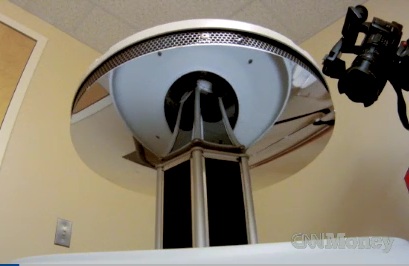
This is a new product called the Xenex, developed at the Houston Technology Center by epidemiologists Julie Stachowiak and Mark Stibich. Built to use UV light to kill harmful microorganisms, the Xenex is now in about two dozen hospitals across the country, and the efficiency of these machines has sparked interest.
Dr. Mary Jo Cagle, the chief quality officer of Cone Health, a five-hospital healthcare system in North Carolina, recently evaluated the benefits of the Xenex in her hospitals. Since four of Cone's hospitals began using the Xenex in January 2011, the chain has reduced its incidence of MRSA infections by 35% hospital-wide, and lowered it to zero in the intensive care units, where infections can be the most devastating.
For very sick patients, a bug as common as MRSA (which was hyped up in the media a couple of years ago) could spell disaster. At Cooley Dickinson Hospital in Northampton, Massachusetts, there was a 67% drop in cases of infection related to the superbug C. diff, which can cause diarrhea, sepsis and death, even in a relatively healthy patient.

This is a great idea that anyone should appreciate, but the real publicity and marketing guy making the magic happen is Brian Cruver, a former Enron trader. As a former part of a company that leaves a bitter imprint on the economy for its rampant corruption, he says he "wanted to get involved with ventures that did some good." Since he joined the Xenex company in 2009 as CEO, he has expanded it to 30 employees and raised over $5 million from investors. And the machines are doing well too.
 Each Xenex costs about $80,000, and the average hospital needs at least two to disinfect every room once a day. While this sounds expensive to the common man or college student, but a MRSA infection could cost upwards of $28,000 to treat, costs which the hospital would have to supply if the infection was caught there. Cone Health estimates a savings of at least $3 million with the addition of Xenex, making the devices extremely cost effective.
The best part is that doctors and nurses don't have to disrupt their normal routines, and cleaning can be done much faster. This will overall result in higher patient care and health. Job well done!
Tuesday, January 17, 2012
Wikipedia Blackout
Happy 2012! Intersession is in full swing here at Hopkins, and most of the STS team is back in action. There's a lot going on in our little Production Room, ranging from modeling projects to internal reorganization,and good progress is being made.
But enough about us for today. Tomorrow an unprecedented event is going to happen to protest the Stop Online Piracy Act (SOPA) and Protecting Internet Protocol Act (PIPA) across major sites on the internet: a blackout. The internet is literally going out for 24 hours.
Leading the way towards this dark path is information mogul Wikipedia, which will suspend its English language services for all of Wednesday, January 18 (you will still be able to access Wikipedia in other languages). Most websites participating in this blackout will return a 503 HTTP error message when anyone goes to their site. This, according to various Google+ posts, pages, and updates from major organizations, will help the "STOP SOPA" movement in two ways: the content on the site will be noted as "not real" and therefore will not be indexed; and even with the same "site offline" message on all the URLs, it won't cause duplicate content issues.
Some of you may wonder how the Googlebot web crawler is going to respond to the drop in available information on the blackout day. Concerns for this are relatively low, since it's only one day (a relatively short time compared to the amount of time it has spent crawling already), and most people think the crawler's ability to reach a site like Wikipedia will remain as high as before the blackout, therefore able to recover quickly afterwards.
The internet is exploding with people across the country and the world protesting SOPA and PIPA. Twitter has introduced a #stopsopa tag, and anyone who is supporting the blackout can tag it at any time today or tomorrow. People are changing their pictures to Stop SOPA banners, posting on news sites about this act, and basically spreading their word and opinions as quickly and widely as they can.
Other giants are taking measures not as extreme as a blackout, but they are still protesting. Google will put out a doodle tomorrow to protest SOPA, and while Twitter says it would be "foolish" to shut down an international business site to protest the legislation of one nation, it too has spoken out against SOPA.
But for all of this frenzy, what is SOPA even about? Basically, it would allow the Justice Department to obtain an order to shut down a site suspected of piracy and make it all but vanish from the internet entirely. This obviously means sites that illegally post videos and music available for download will be shut down, but the major concerns against this are that it will allow the government to shut down legitimate sites that have free content. There is another clause, a DNS-blocking requirement, that would prevent computers from reaching overseas sites suspected of piracy. SOPA is the House of Representatives version of PIPA in the Senate, although both would meet the same end goals.
The supporters are mostly from Hollywood offices and record companies (MPAA/RIAA), who argue that by eliminating internet piracy, you are also eliminating the extra costs that go with it, which will overall reduce prices. The internet and technology advocates argue that it's too much government involvement in their businesses, and what's to stop people from breaking the system even if SOPA passes? Even top officials in Homeland Security think that clauses like the DNS-blocker will be a great blow to national security. The fear of the dangers of this act is real, and the government is sitting up and taking notice.
The White House officially took a stand against SOPA over the holiday break, mostly in response to what the people have been saying directly on the internet. (This is a perfect example of power deriving from the consent of the governed, no?) In the wake of so much opposition, Republicans and Democrats alike are backing out of support for these bills, or amending them to assuage the public. The legislation on SOPA has stalled until "outstanding concerns" have been addressed, but PIPA is still "alive and kicking," according to Jimmy Wales of Wikipedia.
This is the first time in a long time that many groups of people, from corporations to a teenager, have agreed on one thing and attacked it with full-force. With so many decrying SOPA and PIPA, it's a wonder that anyone can support it. There is a real chance this legislation will pass, and that will affect how the First Amendment rights are advocated for in courts of law and enforced in public for years to come.
Our nation is dependent on technology, and to pass SOPA would mean that everyone would lose. That's what Wikipedia and the rest of the internet are trying to prove.
But enough about us for today. Tomorrow an unprecedented event is going to happen to protest the Stop Online Piracy Act (SOPA) and Protecting Internet Protocol Act (PIPA) across major sites on the internet: a blackout. The internet is literally going out for 24 hours.
Leading the way towards this dark path is information mogul Wikipedia, which will suspend its English language services for all of Wednesday, January 18 (you will still be able to access Wikipedia in other languages). Most websites participating in this blackout will return a 503 HTTP error message when anyone goes to their site. This, according to various Google+ posts, pages, and updates from major organizations, will help the "STOP SOPA" movement in two ways: the content on the site will be noted as "not real" and therefore will not be indexed; and even with the same "site offline" message on all the URLs, it won't cause duplicate content issues.
Some of you may wonder how the Googlebot web crawler is going to respond to the drop in available information on the blackout day. Concerns for this are relatively low, since it's only one day (a relatively short time compared to the amount of time it has spent crawling already), and most people think the crawler's ability to reach a site like Wikipedia will remain as high as before the blackout, therefore able to recover quickly afterwards.
The internet is exploding with people across the country and the world protesting SOPA and PIPA. Twitter has introduced a #stopsopa tag, and anyone who is supporting the blackout can tag it at any time today or tomorrow. People are changing their pictures to Stop SOPA banners, posting on news sites about this act, and basically spreading their word and opinions as quickly and widely as they can.
Other giants are taking measures not as extreme as a blackout, but they are still protesting. Google will put out a doodle tomorrow to protest SOPA, and while Twitter says it would be "foolish" to shut down an international business site to protest the legislation of one nation, it too has spoken out against SOPA.
But for all of this frenzy, what is SOPA even about? Basically, it would allow the Justice Department to obtain an order to shut down a site suspected of piracy and make it all but vanish from the internet entirely. This obviously means sites that illegally post videos and music available for download will be shut down, but the major concerns against this are that it will allow the government to shut down legitimate sites that have free content. There is another clause, a DNS-blocking requirement, that would prevent computers from reaching overseas sites suspected of piracy. SOPA is the House of Representatives version of PIPA in the Senate, although both would meet the same end goals.
The supporters are mostly from Hollywood offices and record companies (MPAA/RIAA), who argue that by eliminating internet piracy, you are also eliminating the extra costs that go with it, which will overall reduce prices. The internet and technology advocates argue that it's too much government involvement in their businesses, and what's to stop people from breaking the system even if SOPA passes? Even top officials in Homeland Security think that clauses like the DNS-blocker will be a great blow to national security. The fear of the dangers of this act is real, and the government is sitting up and taking notice.
The White House officially took a stand against SOPA over the holiday break, mostly in response to what the people have been saying directly on the internet. (This is a perfect example of power deriving from the consent of the governed, no?) In the wake of so much opposition, Republicans and Democrats alike are backing out of support for these bills, or amending them to assuage the public. The legislation on SOPA has stalled until "outstanding concerns" have been addressed, but PIPA is still "alive and kicking," according to Jimmy Wales of Wikipedia.
This is the first time in a long time that many groups of people, from corporations to a teenager, have agreed on one thing and attacked it with full-force. With so many decrying SOPA and PIPA, it's a wonder that anyone can support it. There is a real chance this legislation will pass, and that will affect how the First Amendment rights are advocated for in courts of law and enforced in public for years to come.
Our nation is dependent on technology, and to pass SOPA would mean that everyone would lose. That's what Wikipedia and the rest of the internet are trying to prove.
Thursday, October 20, 2011
Hopkins is Using Tech Right
This morning I went on to the CNN tech page to find a suitable article to write about on this blog. To my happy surprise, Hopkins was on the front page for their exceptional use of social media and interactive blogs to attract students. My friends Noah Guiberson and Lucie Fink were even featured in the article! But I digress; let's talk about what Hopkins is doing that's so fresh.
I'm not sure how many of you have heard of or used Hopkins Interactive, but it's a centralized location for the student blogs written about the various experiences of their four years at Hopkins. The blogs are updated daily (at least), keeping pace with the dynamic environment of Hopkins itself. Every week there is a guest blogger who is invited to give his perspective of Hopkins and the opportunities it has to offer, so it's not the same 9 people from each class each time. This allows prospective students to get a true view of what it means to be a Hopkins student, beyond the shiny brochures that are sent in the mail by every other college. HI is a way for Hopkins to stand out and be remembered.
But HI isn't the only way that Hopkins is using blogs to reach its prospective and current students. At the bottom of the HI page is a directory to four other blogs Hopkins runs, including blogs about the majors and minors offered from the point of view of those who study them. No gimmicks, no false appeals, just experiences on the web for the world to see and share. You can also read about what the office of Admissions is up to (especially now that college apps are flooding in!), the social events on campus, and the guest blogs.
And still Hopkins surpasses other schools with its effective use of Twitter. There are currently about 30 Twitter accounts associated with some department or branch of Hopkins, including the Applied Physics Laboratory, Peabody, and the famous Shush Lady. All this, while not always good, lets students connect to the campus both in et ex situ.
Congrats Hopkins Insider on your exemplary use of social media! Just another reason to be a Blue Jay and proud.
I'm not sure how many of you have heard of or used Hopkins Interactive, but it's a centralized location for the student blogs written about the various experiences of their four years at Hopkins. The blogs are updated daily (at least), keeping pace with the dynamic environment of Hopkins itself. Every week there is a guest blogger who is invited to give his perspective of Hopkins and the opportunities it has to offer, so it's not the same 9 people from each class each time. This allows prospective students to get a true view of what it means to be a Hopkins student, beyond the shiny brochures that are sent in the mail by every other college. HI is a way for Hopkins to stand out and be remembered.
But HI isn't the only way that Hopkins is using blogs to reach its prospective and current students. At the bottom of the HI page is a directory to four other blogs Hopkins runs, including blogs about the majors and minors offered from the point of view of those who study them. No gimmicks, no false appeals, just experiences on the web for the world to see and share. You can also read about what the office of Admissions is up to (especially now that college apps are flooding in!), the social events on campus, and the guest blogs.
And still Hopkins surpasses other schools with its effective use of Twitter. There are currently about 30 Twitter accounts associated with some department or branch of Hopkins, including the Applied Physics Laboratory, Peabody, and the famous Shush Lady. All this, while not always good, lets students connect to the campus both in et ex situ.
Congrats Hopkins Insider on your exemplary use of social media! Just another reason to be a Blue Jay and proud.
Friday, October 14, 2011
Adam Riess' Nobel Prize
Congratulations to our own Adam Riess, Krieger-Eisenhower Professor of Physics and Astronomy and staff member of the Space Telescope Science Institute, on his 2011 Nobel Prize in Physics for his work on Type Ia Supernovae and Cepheid stars, which led to the discovery of dark energy and that the universe is indeed expanding. We look forward to the next discovery to be made at Johns Hopkins. Hit those books people!
Subscribe to:
Posts (Atom)